


Are killing-free societies possible? Evidence suggests that by working with committed organizations, leaders and individuals like you we can signficantly reduce and eventually eliminate human killing. This goal belongs to everyone, across political, religious or ethnic affiliations. The development of truly civil societies, and nothing less than the future of humankind, depends on our joint success.

Join us today:
  • Sign the affirmation to work toward a world where human killing is stopped,
  • Take our survey on how we can work together to end killing now,
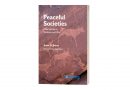
  • Download a free book to gain additional insights into creating killing-free societies, or
  • Email us your ideas.
  • Founder

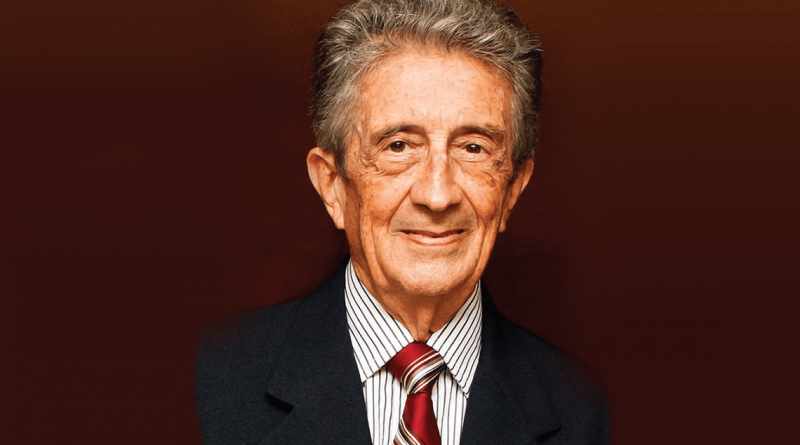
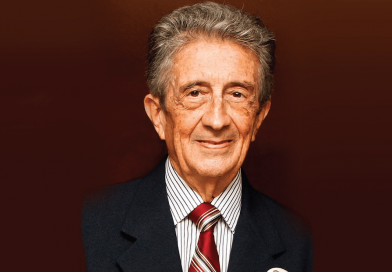
    Professor Glenn D. Paige


    The journey from soldier to scholar to founder with others of the Center for Global Nonkilling can be told in terms of three discoveries.

    The first began with a case study with interviews of how President Harry S Truman and other leaders engaged the United States in the Korean War in which Paige had served during 1950-52. This became a doctoral dissertation published as a book The Korean Decision: June 24-30, 1950 (1968).

    Subsequent comparative study of divided Korea’s divergent development since 1945 led to discovery of the creative potential of political leadership for social change and a call to make this a special field for research, teaching, and service in the academic discipline of political science. This was published in The Scientific Study of Political Leadership (1977).

    The second discovery was of nonkilling as a basic value for political science and life. In 1974, blocked in peacemaking efforts to bring North Korean scholars to visit the University of Hawai‘i, Paige experienced a sudden transformational awakening that came in three silent words, “No more killing!”

    This led to a critical book review by him of his book on the Korean War, which essentially had been a scientific apologia for war. This was published as “On Values and Science: The Korean Decision Reconsidered” in the American Political Science Review (December 1977). Such an author review was unprecedented in the history of the APSR since 1906.

    No More Killing!The third discovery followed projection of the logic of nonviolent critical analysis applied to his own scientific work to critique the violence-accepting assumptions of the discipline of political science as a whole. After 28 years of research, teaching, and travel to discover foundations for a new nonkilling discipline the results were published as Nonkilling Global Political Science (2002; 3rd ed. 2009).

    By 2009 the book was being translated into 34 languages and had led to convening the First Global Nonkilling Leadership Forum in Honolulu, November 1-4, 2007. Proceedings are published in Global Nonkilling Leadership (2009).

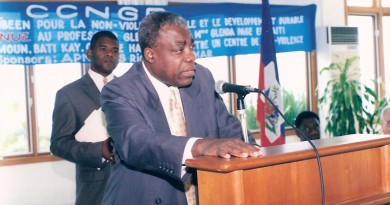
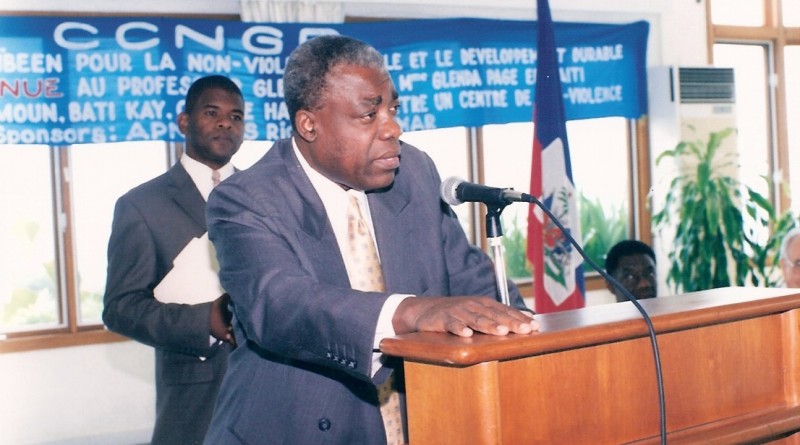
    The Global Forum led to visionary support by the humanitarian foundation Humanity United to transform the nonprofit Center for Global Nonviolence founded by Paige and others in 1994 (with affiliates in Haiti, Nigeria, and Great Lakes Africa) into a unique Center for Global Nonkilling (2008 - ). This startup support enables a Leadership Team of seven workers, including two co-directors, to begin to demonstrate capability—in worldwide cooperation with individuals, organizations, and institutions— to carry out the CGNK’s mission “to promote change toward the measurable goal of a killing-free world.”

    Every step on the journey of the founder from war to chair of the Governing Council of the Center for Global Nonkilling has been made possible by inspiration and support of others at home and from throughout the world. Chief among them is assistance in every aspect of work since 1973 of his wife Glenda Hatsuko (Naito) Paige. Inadequate acknowledgement to all is expressed in the publications that mark the discoveries of the journey.


    The son of a YMCA social worker, Glenn Durland Paige was born on June 28, 1929 in Brockton, Massachusetts, in the northeastern part of the United States known as New England. He grew up in Rochester, New Hampshire, with summers in Provincetown, Cape Cod, Massachusetts. He served in the U.S. Army (1948-52). He is a graduate of Phillips Exeter Academy (1947), Princeton University (A.B., politics, 1955), Harvard University (A.M., East Asian regional studies, 1957) and Northwestern University (Ph.D. political science, 1959). After teaching at Seoul National University (1959-61), and Princeton University (1961-67), he taught at the University of Hawai‘i (1967-92). He has lived in Honolulu since 1967 and has benefited from kindness of others in travel to more than thirty countries.


    Honolulu
    February 15, 2009


    Glenn D. Paige's drawing is the work of "Sona & Jacob" (India). © Copyright HWK-Verlag, Germany.
    The text on this page is under GNU Free Documentation License. Visit Wikipedia for an updated biographic account.