
Are killing-free societies possible? Evidence suggests that by working with committed organizations, leaders and individuals like you we can signficantly reduce and eventually eliminate human killing. This goal belongs to everyone, across political, religious or ethnic affiliations. The development of truly civil societies, and nothing less than the future of humankind, depends on our joint success.

Join us today:
  • Take our survey on how we can work together to end killing now,
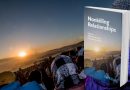
  • Download a free book to gain additional insights into creating killing-free societies, or
  • Email us your ideas.
  • Human Rights: A Nonkilling Perspective, by Francisco Gomes de Matos

    The sad, tragic, continuing increase in violence and killing globally calls for a new perception and implementation of the 61-year old Human Rights Tradition. In such spirit, a Nonkilling Approach to those universally proclaimed and recognized rights is presented as an innovative addition to deeply humanizing the ways in which human beings exercise their rights and fulfil their responsibilities as 21st century planetary citizens. As a new, foundational concept for Global Civil Society to prepare human beings for Dignity, Justice and Peace, Glenn D. Paige’s Nonkilling Approach, as described in his book Nonkilling Global Political Science (latest edition, 2009), can be thought of as a transformative process with many applicational possibilities.

    Accordingly, in the perspective of Nonkilling, Human Rights can be identified by means of the verb KILL, so as to emphatically call attention to the need for global prevention, reduction, and if possible, elimination of violations of human rights which result in the loss of human lives and of animal lives. The human right to life is
    thus nonkillingly paraphrased as the right not to be killed.

    As a strategy for nonkilling conscientization, examples of Human Rights violations are given below, from a perspective of Nonkilling. After reading such list, readers are invited to see items focused on specific human rights (communicative, cultural, intercultural, economic, environmental, political, religious, rights), all available on this section (Media & Publications, under Learning Resources).

    The four following examples are meant to be representative of the varied set of dehumanizing, destructive actions perpetrated by human beings. Please reflect on each example and discuss its implications for the challenging, permanent struggle of Humankind to overcome ways of KILLING not only physically but socially, politically, economically, culturally, etc

    EXAMPLES

    We KILL a person POLITICALLY when we deprive him or her of the right to vote freely in a local or national election

    We KILL a person SOCIALLY when we deprive a person of the right to education / literacy

    We KILL a child when we force him or her to become a soldier and engage in lethal actions

    We KILL a woman when she is subjected to sexual abuse, rape and other forms of violent suffering

    We KILL women when we subject them to physical or psychological violence, such as sexual abuse of girls, genital mutilation of women

    We KILL a person communicatively when we threaten her by means of violent language

    We Kill politically when we deprive a community, the political beings in a country of their right to vote, freely.

    Given the multidimensional nature of HUMAN RIGHTS, their implementation calls for an integration of social-economic, civil-political, cultural-intercultural rights. May the application of a Nonkilling perspective inspire toward what the late Robert F. Drinan
    called “The global mobilization of shame,” in his inspiring book “The Mobilization of Shame”. A world view of human rights (2001).

    To end this poetically, may I add a rhymed reflection:

    On Human Rights & Responsibilities, creatively let’s act
    A new way of promoting Human Rights let’s now realize
    by adopting the NONKILLING approach, as a humanizing fact
    Global Civil Society our Human Rights will revitalize

    May this text and the specific pieces on Human Rights: A nonkilling checklist provide food for thought and action. Feedback will be welcome.