


Are killing-free societies possible? Evidence suggests that by working with committed organizations, leaders and individuals like you we can signficantly reduce and eventually eliminate human killing. This goal belongs to everyone, across political, religious or ethnic affiliations. The development of truly civil societies, and nothing less than the future of humankind, depends on our joint success.

Join us today:
  • Take our survey on how we can work together to end killing now,
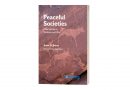
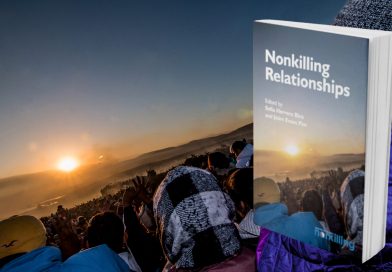
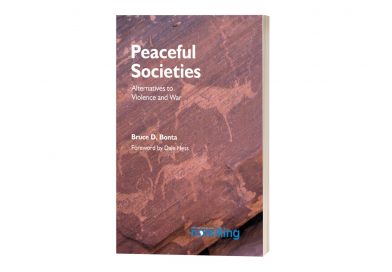
  • Download a free book to gain additional insights into creating killing-free societies, or
  • Email us your ideas.
  • Human Linguistic Rights: a Nonkilling checklist, by Francisco Gomes de Matos

    We KILL LINGUISTICALLY when we

    deprive a person, a group, a community of the right to language acquisition ,that is, learning one’s native language(s)

    deprive him, her, them of the right to language development, that is, to linguistically developing in such language(s)

    deprive him, her, them of the right to make linguistic choices in using such languages and in additional languages. For example, choices in pronunciation, grammar, semantics, discourse, vocabulary

    deprive him, her, them of the right to use languages creatively, in ways other language users had not done before. Such linguistic creativity can be manifested through varied texts , in prose or poetry. All language users are linguistically
    creative and have the right to exercise their linguistic creativity.

    deprive him, her, them of the right to maintain/sustain their native language(s)

    cause him, her, them serious linguistic harm, as for instance, when we

    antagonize, coerce, frighten with threats, insult, intimidate, offend;

    don’t do our share to help overcome linguistic discrimination. indignity, injustice

    don’t do our share to reduce, stop linguistic genocide, the extinction of languages

    fail to help educating Humanking to learn to use languages peacefully, nonviolently, nonkillingly

    fail to help promote linguocultural diversity in our educational systems

    The above list is open-ended. To expand it, probe it, see the vast and varied literature on Human Linguistic Rights.Look for books by Tove SkutnabbKanga. Access the text of the Universal Declaration of Linguistic Rights,proclaimed in Barcelona June 6,1996.

    Also see, on the Google, my Two typologies of linguistic rights, a summary in English of an article written in 1984 and originally published in Portuguese in Brazil’s now extinct Revista Cultura Vozes. For a pioneering treatment of Nonkilling Linguistics, see the chapter on that emerging area of the science of language, written by Patricia Friedrich and F. Gomes de Matos, available on the CGNK website.
    To probe some of the connections between Llinguistic Rights and Language Law, google International Academy of Comparative Linguistic Law, a Canadian initiative with Secretariat in Montreal. It holds important Congresses on a variety of relevant topics.

    As stated above,any listing of Linguistic Rights is but a fraction of possibilities. A look at Constitutions of countries of the world may also prove instructive, to see what kind of linguistic rights are being guaranteed by governments. In workshops on Linguistic Rights given by this author at the Federal University of Pernambuco,participants are asked to compile lists of Linguistic Rights and Responsibilities (rights and responsibilities go together) which apply to their individual conditions and to justify such compilation. Language educators in particular seem to enjoy being challenged to provide instances of educational-linguistic- killing uses of languages.Since Nonkilling Linguistics is a new frontier in Interdisciplinary Research grounded on Nonkilling, readers are also referred to to the Glenn D.Paige’s seminal book on Nonkilling Global Political Science, translated into many languages. A Brazilian Portuguese edition is forthcoming, by the Editora Universitária, Universidade Federal de Pernambuco, Recife, Brazil.
    How do you react to the metaphorizing of killing linguistically? Compare your reaction to those of friends and colleagues. This is but one of the changes called for in the theory and practice of Nonkilling Linguistics.

    Francisco Gomes de Matos is an applied peace linguist from Recife, Brazil; Co-author of the chapter "Toward a Nonkilling Linguistics" (Toward a Nonkilling Paradigm, Honolulu, 2009), basis of the Course "Nonkilling Linguistics" at Wikiversity's School of Nonkilling Studies. Professor Emeritus, Universidade Federal de Pernambuco; Co-founder and currently President of the Board, Associação Brasil América. He can be reached at fcgm@hotlink.com.br