
Are killing-free societies possible? Evidence suggests that by working with committed organizations, leaders and individuals like you we can signficantly reduce and eventually eliminate human killing. This goal belongs to everyone, across political, religious or ethnic affiliations. The development of truly civil societies, and nothing less than the future of humankind, depends on our joint success.

Join us today:
  • Sign the affirmation to work toward a world where human killing is stopped,
  • Take our survey on how we can work together to end killing now,
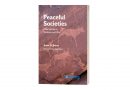
  • Download a free book to gain additional insights into creating killing-free societies, or
  • Email us your ideas.
  • Nonkilling at International Peace Research Conference, Sydney

    February 2010. Nonkilling will be present at the 2010 International Peace Research Association Conference to be held in Sidney, Australia, July 6-10. Among other interventions, the Commission on Art and Peace has included the proposal by Olivier Urbain on "The Art of Nonkilling: The Roles of the Arts in Making a Nonkilling Society Possible".

    Nonkilling Neuroscience Research Colloquium Report Released

    January 2010. Every day, new information is emerging on the brain, and how it works. New discoveries are occurring regularly as new frontiers in understanding are further explored. This will only increase as brain research continues and becomes more sophisticated. The purpose of this research initiative is to explore what and how new advances might expand our understanding of the brain as it relates to killing and nonkilling. Read the report.

    CGNK Joins the WHO's Violence Prevention Alliance

    January 2010. The Center for Global Nonkilling has been accepted as a formal participant of the World Health Organization's Violence Prevention Alliance (VPA), a network of WHO Member States, international agencies and civil society organizations working to prevent violence. VPA participants share an evidence-based public health approach that targets the risk factors leading to violence and promotes multi-sectoral cooperation.

    Leadership Academy Graduates Begin Nonkilling Work

    January 2010. The Center for Global Nonkilling (CGNK) is seeking ways to reduce killing in the world and help people realize that it is possible to change the prevailing attitudes and conditions which lead to killing. One essential strategy is to help leaders realize the possibilities and support their efforts to incorporate nonkilling principles and practices into their spheres of influence.

    Trees of Hope Symbolize Reduction of Killings in Pernambuco

    January 2010. Since May 2007 PE Body Count, an initiative started by local journalists, has been tracking every homicide occurrence in the North-Eastern Brazilian state of Pernambuco, one of the most violent regions in the country. The project maintains a website which is updated on a daily basis including the names, personal details and circumstances of every victim of killing, also feeding them into an statistical database and virtual counter.

    New Brazilian Edition Launched

    December 2009. The Brazilian edition of Nonkilling Global Political Science, by Glenn D. Paige, was launched on December 22 at the Auditorium of the Federal University of Pernambuco Press, in Recife (Pernambuco). All top university officials and distinguished guests from the city and state governments attended.

    Nonkilling Enters Anthropology Syllabus

    December 2009. Nonkilling will be the focus of the University of Hawai'i course "Aggression, War and Peace" (ANTH/PACE 345) during the first semester of 2010. The course is lectured by Professor Leslie E. Sponsel, Director of the Ecological Anthropology Program and member of the Nonkilling Anthropology Research Committee.

    Brazilian Institute for Nonkilling is Launched

    November 2009. The Brazilian Institute for Nonkilling (Instituto Brasileiro do Não matar, INAM) was formally registered and presented this month as a nonprofit civil organization. The Institutes's goal is to increase the understanding and application of the nonkilling approach in Brazil and other Portuguese-speaking countries.

    Political Science Does Not kill! A Seminar in Southern Thailand

    November 2009. The Center for Global Nonkilling will organize a panel nonkilling political science on December 1-2 at the Prince of Songkhla University in Haad Yai, Southern Thailand. The panel follows the title of the Thai translation of Glenn D. Paige's book "Nonkilling Global Political Science", "rát-tà-sàat mâi kâa" (Political Science does not kill!).

    Nonkilling India Campaign Starts its November Program

    November 2009. The Citizens Initiative for a Nonkilling India started on November 13 a ten-day intense program of activities as part of its Nonkilling India Campaign. The program marks the concluding phase of the year-long Observance of the Centenary of Gandhi's seminal work "Hind Swaraj", beginning on November 13 (the day Gandhi started writing "Hind Swaraj") and concluding on November 22 (the day in which it was concluded).

    Syndicate content